

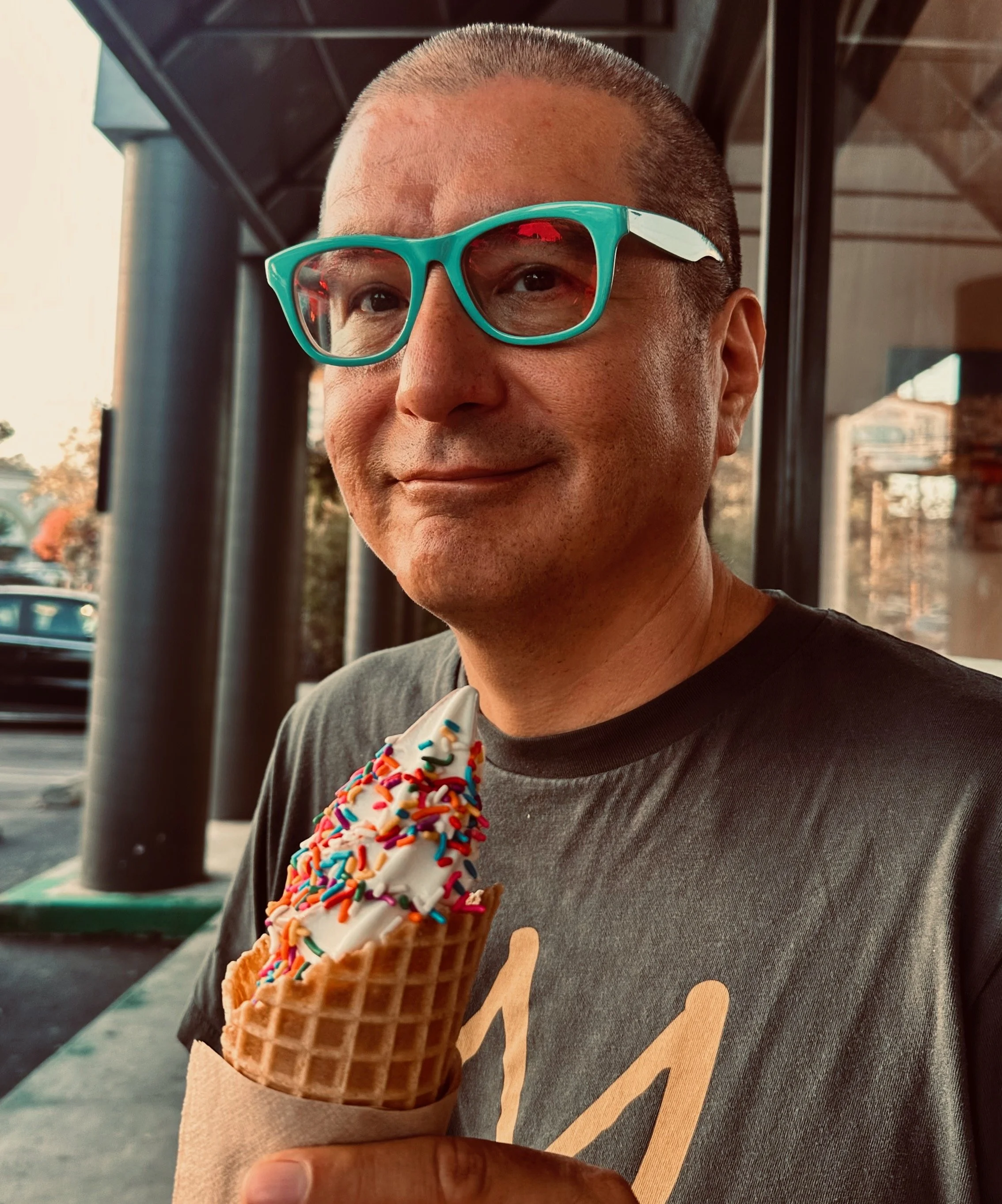
Scott Bear Don’t Walk,
autism coach
Scott works with adults exploring what autism means in the context of a life already lived and a life still being made.
For many people, recognizing themselves as autistic brings an unexpected re-reading of the past. Experiences with relationships, work, family, intimacy, gender, sensory life, burnout and belonging can begin to make sense in new ways. Scott’s work creates space for that exploration without treating autism as a problem to be corrected or a set of behaviors to be managed.
Before becoming a coach, Scott worked as a marriage and family therapist. His approach draws on years of working closely with individuals and couples, as well as his own experience of recognizing his autism in adulthood. He brings particular experience with relationships, sexuality and intimacy, identity, neurodivergence and the complicated process of becoming more fully oneself after years of adaptation and masking.
Scott is Native American and a member of the Apsáalooke (Crow) Tribe of Western Montana. His family is Apsáalooke (Crow) and Bitterroot Salish. His name, Bear Don’t Walk, comes from his great-grandfather’s vision of an old grizzly bear. His great-great-grandfather was a medicine person and healer. Scott understands his own work within this longer tradition of attending closely to people, their stories and the lives they are trying to make.
Scott studied at Oxford University as a Rhodes Scholar, received an MFA from New York University, and pursued doctoral study at the University of Chicago’s Committee on Social Thought. He has also trained in mindfulness practice at the Shambhala Mountain Center.
His coaching is conversational, collaborative and grounded in a simple premise: the goal is not to become less autistic. It is to understand yourself well enough to build a life in which you can be more fully yourself.